
Reviewed · MONGOLIA
Cooking Class in a Traditional Ger Home in Ulaanbaatar Suburbs
A meal can open Mongolia’s front door. This private cooking class takes you about 5 kilometers from central Ulaanbaatar to Bee and Soy’s family ger, where you prepare handmade noodle soup and steamed dumplings, then eat them together. I love the warm, personal welcome and the chance to see how Mongolian food connects with family customs, seasonal ingredients, and nomadic life.
I also like the hands-on format. You are not watching a chef perform behind a counter. You help shape dumplings, prepare ingredients, and learn family methods. Bee and Soy add stories, traditional songs, and shagai, a knuckle-bone game. The main consideration is the $199 price, which is high for a half-day meal, and the setting outside the city may involve a taxi, local transport, or a short walk.
In This Review
- Key points to know before booking
- Why this cooking class feels different
- Meeting Bee and reaching the family ger
- Tea, customs, and the first look inside the ger
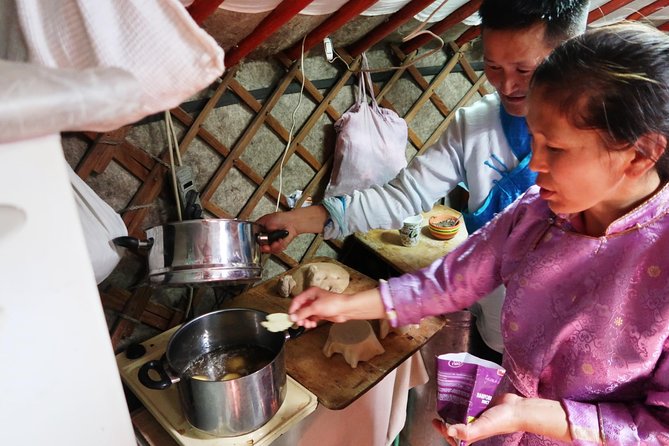
- Making noodle soup and steamed dumplings
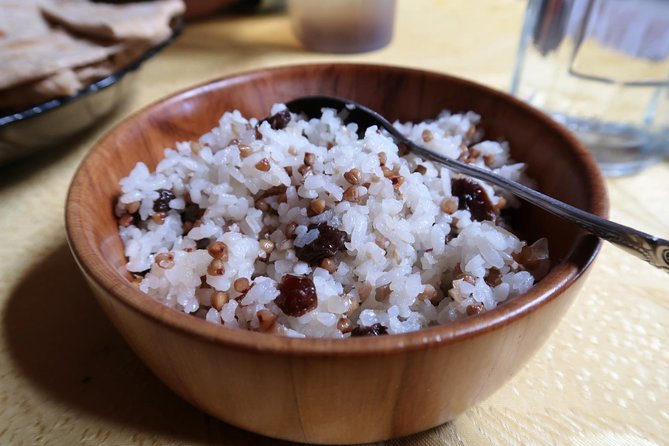
- Eating the meal you helped prepare
- Shagai, bones, and Mongolian family traditions
- The value of $199 for a private half-day
- Who will enjoy this experience most
- Practical advice for a smooth visit
- Should you book the ger cooking class?
- FAQ
- Where does the cooking class take place?
- How long does the experience last?
- Is hotel pickup included?
- What food will I learn to cook?
- Is sheep meat part of the meal?
- Is a vegetarian option available?
- Is this a private activity?
- What is the cancellation policy?
Key points to know before booking
- A real family ger near Ulaanbaatar: You visit Bee and Soy at their traditional, round felt-covered home about 5 kilometers from the city center.
- Cooking from scratch: The class may include handmade noodle soup and steamed dumplings prepared with local ingredients and family recipes.
- More than a meal: You learn about Mongolian customs, food beliefs, daily life, animal use, and traditional games.
- Private and personal: Only your own group participates, making it easier to ask questions and request a vegetarian meal.
- Hotel pickup and drop-off: Bee meets you at your Ulaanbaatar hotel and accompanies you to the ger and back.
- Allow most of an afternoon: The experience lasts about 5 hours and 30 minutes, with cooking, eating, conversation, and cultural activities.
Why this cooking class feels different
Many food classes keep you in a restaurant kitchen or a polished studio. This one takes place in a family ger on the edge of Ulaanbaatar. That change matters. You are not simply learning a recipe. You are seeing where the food, furniture, customs, and family life fit together.
Bee and his wife, Soy, host the experience in their own home. The tone is informal and personal. You may sit with them over warm nettle tea, ask about Mongolia, and hear how food is used in everyday life. The tea itself is a small but memorable detail. It is made from nettles gathered from a nearby mountain.
I like that the experience leaves room for conversation. Bee has been praised for explaining Mongolian history, beliefs, food traditions, and modern daily life in a way that connects naturally with the meal. Soy helps create the easy, welcoming mood that makes the ger feel less like a set piece and more like someone’s home.
This is particularly useful if you have already seen the central sights of Ulaanbaatar and want a closer look at ordinary life. You will see a part of the city beyond the main tourist center, including the ger district where many local families live.
Other Ulaanbaatar trips people book alongside this one:
- From Ulaanbaatar: Genghis Khan Statue NationalPark CamelRide
★ 4.8 · 353 reviews - Genghis Khan Statue Day Tour+National Park+Camel Ride+Eagle
★ 4.5 · 261 reviews - From Ulaanbaatar: Central Mongolia Guided 3-Day Tour
★ 4.6 · 186 reviews
Meeting Bee and reaching the family ger
The day begins with pickup at your Ulaanbaatar hotel. Bee meets you there and travels with you to the family home. Depending on the arrangements, the journey may be by car, taxi, or public transport.
The ger is about 5 kilometers from the city center, but city traffic and local transport can affect the timing. Some accounts describe a taxi and local bus followed by a short walk uphill. That is useful to know if you prefer a door-to-door vehicle transfer or have mobility concerns. The tour does offer round-trip transfers, but the exact form of transport is not fixed in the information provided.
The ride is part of the setting. You leave the central city and see a more residential side of Ulaanbaatar before reaching the ger district. Bee may also share information about the city along the way. One person even found the pickup and informal city conversation useful as an early introduction to Ulaanbaatar.
The transfer is not a major sightseeing stop, so you should think of it as a local connection rather than a guided city tour. Still, it helps the experience feel rooted in the place instead of sealed off from it.
Tea, customs, and the first look inside the ger
Bee and Soy welcome you with nettle tea after you arrive. This opening gives everyone time to settle in before the cooking begins. It also introduces an important theme: Mongolian food is shaped by what families can gather, raise, preserve, and share.
A ger is a round home covered in felt, traditionally used by nomadic families across Mongolia. Inside, the shape creates a close, social room. You are near the cooking area, the family, and the meal rather than separated into different spaces.
Bee explains the ger and how the family uses it. You may also hear about Mongolian beliefs around cooking and eating. For example, food can carry seasonal meaning, and different parts of an animal may be valued for their qualities and practical uses.
The setting is simple and homey rather than restaurant-like. That is a strength if you want a direct encounter with Mongolian family life. It can be a drawback if you expect professional kitchen equipment, a formal demonstration, or a polished classroom. This is home cooking, and the charm comes partly from that lack of polish.
Making noodle soup and steamed dumplings
The main cooking session focuses on classic Mongolian home dishes. The menu can change with the season, but handmade noodle soup and steamed dumplings are central examples. You work with fresh ingredients and follow family recipes rather than simply tasting finished food.
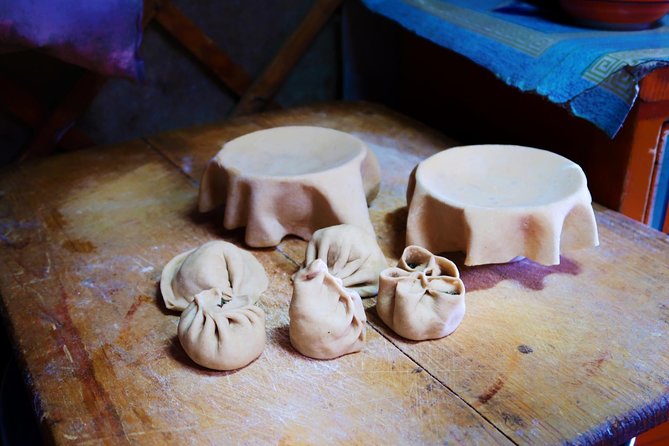
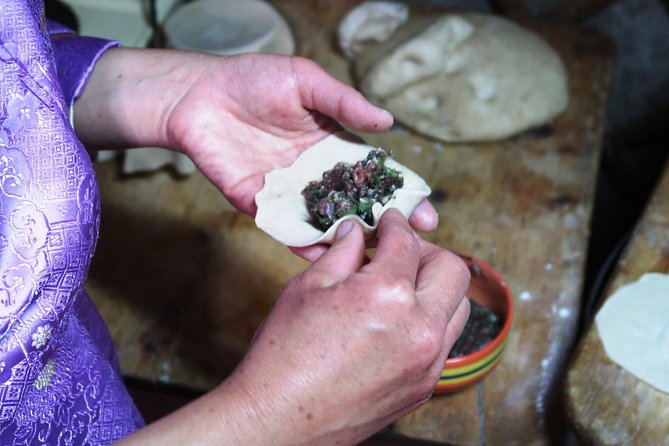
The class is practical. You help prepare the ingredients, make the noodles, and shape the dumplings. The dumpling work gives you a real task, not just a quick demonstration. Be ready for your first few pieces to look less tidy than Bee and Soy’s. That is part of the fun, and the meal still comes together.
The food also opens the door to wider conversations. Mongolian cooking makes use of sheep meat and values the principle of wasting as little as possible. Specific preparations described during the experience have included sheep heart and sheep rump in dumplings, as well as other sheep dishes.
That detail matters for anyone uncertain about meat. Mongolia’s food traditions are closely tied to livestock, and sheep is a normal part of the meal. The menu may include sheep meat, so you should advise the provider about allergies, dietary restrictions, or preferences at the time of booking.
A vegetarian option is available if requested in advance. This is important because a vegetarian meal is not simply a matter of removing meat at the table. Giving Bee and Soy notice allows them to plan a suitable version of the class and meal.
A completely different sort of day out of Ulaanbaatar:
- Ulaanbaatar: Small Group 3-Day Best of Central Mongolia Tour
★ 4.1 · 171 reviews - Terelj national park transport /Best price tour
★ 4.7 · 135 reviews - Ulaanbaatar: Chinggis Khaan Statue and Turtle Rock Day Tour
★ 4.7 · 132 reviews - BEST 5* Chinggis Khaan Airport UBN to Ulaanbaatar Transfer Taxi
★ 5.0 · 116 reviews
Eating the meal you helped prepare
After cooking, you sit down inside the ger and eat together. The meal may include noodle soup, steamed dumplings, and sheep meat. Because you prepared the dishes yourself, the meal feels like the natural end of a shared activity rather than a separate restaurant course.
The food has received some of the strongest praise connected with this experience. The appeal is not only flavor. It is the combination of fresh preparation, family methods, and a better understanding of why the ingredients matter.
One especially interesting point concerns sheep-tail fat, which is valued in Mongolian cooking and described as easy to digest because of its softness. Free-range sheep also eat mountain herbs, and those plants are seen as part of the food’s nourishment. These ideas give you a glimpse of how Mongolian food traditions connect animals, pasture, health, and season.
The meal is also a chance to keep talking. Bee is interested in his visitors’ lives and background, so the exchange goes both ways. You are not expected to sit quietly while an expert lectures. The best part may be the ordinary conversation around the table.
The timing is generous. The full outing lasts about 5 hours and 30 minutes, and individual accounts describe arriving around 10 a.m. and finishing at about 3:30 p.m. That makes this a substantial half-day plan, not something to squeeze between two short city visits.
Shagai, bones, and Mongolian family traditions
The experience often ends with shagai, a traditional game played with animal knuckle bones. Bee shows how bones have been used in Mongolian life for games, toys, and other practical purposes.
This is a fine closing activity because it moves the focus away from food without leaving the family setting. You learn something that children and adults can enjoy together, and you see how everyday objects can carry cultural meaning.
The bone games also reinforce the lesson about using the whole animal. In a pastoral culture, livestock provides food and materials, so bones are not automatically discarded. They may become game pieces, toys, or fasteners.
Some sessions have also included Mongolian songs performed by Bee and Soy. Song is not guaranteed as a formal part of every itinerary, but it has been part of the warm social finish for some visitors. The tone is generous rather than staged.
You might also take a short walk around the neighborhood with Bee after the meal. This is not listed as a separate sightseeing stop, so do not book the class expecting a full ger-district walking tour. But if time and circumstances allow, it can add useful context to what you have seen inside the home.
The value of $199 for a private half-day
At $199 per person, this is not a budget lunch. The price makes more sense when you look at what is included: hotel pickup and return, a private session, food preparation, the meal, cultural conversation, and several hours with a local family.
You are paying for access and time as much as for the dishes. A standard restaurant meal can introduce you to Mongolian flavors, but it will not normally show you a family ger, explain food customs, or let you prepare dumplings alongside the people who live there.
The private format is important. Only your group participates, so you can ask direct questions and move at a comfortable pace. A couple or small family that wants a personal introduction to Mongolia may find the price worthwhile. Solo visitors can also benefit because Bee and Soy give the meeting a social shape rather than leaving you to cook alone.
Still, the value depends on your priorities. If you mainly want to eat Mongolian food cheaply, choose a restaurant or market meal. If you want a polished cooking school with a professional kitchen and a fixed menu, this may not fit. The cost is easier to justify if you value personal contact, cultural explanation, and a private setting.
Who will enjoy this experience most
I would recommend this class to you if you want to understand Mongolia through daily life rather than only through monuments and museums. It suits people who enjoy cooking, conversation, family homes, and asking questions.
It is also a strong choice for:
- First-time visitors wanting an easy introduction to Mongolian food and customs
- Solo visitors looking for a friendly local connection
- Couples or small groups who prefer a private outing
- People curious about ger life near Ulaanbaatar
- Food lovers who want to make dumplings and noodles from basic ingredients
- Vegetarians who notify the provider in advance
- Visitors with enough time for a relaxed half-day outside the city center
You may want to skip it if your schedule is tight or if you dislike long social meals. The experience is built around conversation, so it works best when you are willing to be present and curious. It is not a quick class followed by an immediate return to central Ulaanbaatar.
Practical advice for a smooth visit
Book ahead if your dates are fixed. This experience is commonly reserved about 34 days before the visit, which suggests that last-minute space may not always be available.
Tell the provider about allergies, dietary restrictions, or cooking preferences when you book. Vegetarian meals can be arranged, but advance notice is needed. The menu changes with the season, so you should treat the listed dishes as examples rather than a promise of one exact meal.
Wear clothes you can cook in and allow extra time around the transfer. The ger is outside the city center, and the journey may include a taxi, public transport, and a short walk depending on the arrangements.
The mobile ticket is convenient, and confirmation is provided when you book. Free cancellation is available up to 24 hours before the start time for a full refund. Changes or cancellations made inside that 24-hour window are not refunded.
Should you book the ger cooking class?
Book it if your idea of a good Ulaanbaatar experience includes sitting in a family home, learning food traditions from Bee and Soy, and sharing a meal you helped make. The cooking is the doorway, but the real value is the conversation, the ger setting, the stories about sheep and seasonal food, and the chance to see a more personal side of Mongolia.
I would be less quick to recommend it for a short-stay visitor who has only a few hours in the city or for anyone seeking a low-cost meal. For most people with a free half-day and an interest in local life, though, this is a thoughtful use of time and one of the clearest ways to connect food with Mongolia’s living traditions.
FAQ
Where does the cooking class take place?
It takes place in Bee and Soy’s traditional ger home about 5 kilometers from Ulaanbaatar city center.
How long does the experience last?
The experience lasts approximately 5 hours and 30 minutes.
Is hotel pickup included?
Yes. Round-trip transfers from your Ulaanbaatar hotel are included, with transport provided by car, taxi, or public transport depending on the arrangements.
What food will I learn to cook?
The menu may vary by season, but the class may include handmade noodle soup and traditional steamed dumplings prepared from scratch.
Is sheep meat part of the meal?
The meal may include sheep meat. Specific dishes described for the experience have included dumplings and soup, with some preparations using sheep heart or sheep rump.
Is a vegetarian option available?
Yes. A vegetarian option is available, but you must request it when booking.
Is this a private activity?
Yes. Only your own group participates, making it a private and personalized experience.
What is the cancellation policy?
You can cancel at least 24 hours before the experience start time for a full refund. Cancellations or changes made less than 24 hours before the start time are not accepted for a refund.
Recently added around Ulaanbaatar
- Guided Day Tour Terelj National Park Chinggis Khaan Statue★ 5.0 · 3 reviews
- semi-Gobi, Karakorum, Genghis Khan Statue & Terelj National Park★ 3.5 · 3 reviews
- Private – Ulaanbaatar City Tour★ 3.5 · 3 reviews
- Essence of Mongolia 5 Days★ 5.0 · 3 reviews
- Terelj National Park & Chinggis Khan Statue Day Tour★ 5.0 · 3 reviews
- Gobi desert Mongolia for 8 days★ 5.0 · 3 reviews
- 6 Days Gobi Desert Tour with complimentary airport pickup★ 5.0 · 3 reviews
- 6 Days Color of Gobi Desert★ 5.0 · 3 reviews